How to Turn Website Visitors Into Leads: 7 Practical Ways That Work
Getting people to visit your website is good. But visits alone do not grow a business. What matters is what happens after they arrive.
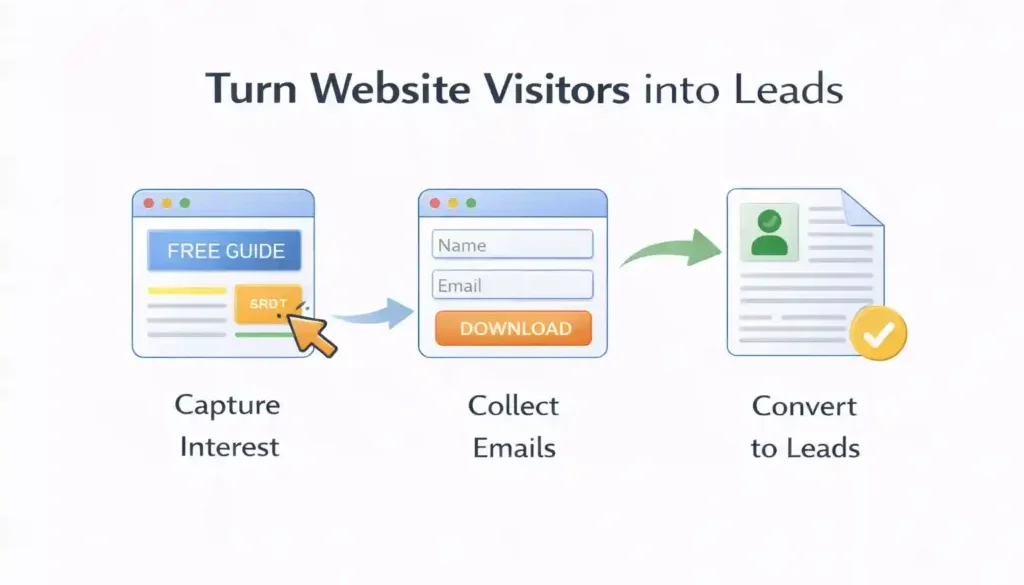
If visitors land on your site and leave without taking action, your marketing is leaking value. That is why learning how to turn website visitors into leads is one of the most important things a business can do.
A website should not just exist. It should guide people toward action. That could mean filling out a form, booking a call, sending a message, or requesting a quote. If that process is unclear, visitors will leave and likely never return.
The good news is that you do not need a complete redesign to improve results. In many cases, small but smart changes can make a big difference.
Why visitor conversion matters
Traffic is useful only when it creates opportunity.
If 1,000 people visit your website but no one contacts you, that traffic has little business value. On the other hand, if 100 people visit and 10 become leads, the website is doing its job well.
That is why businesses need to focus not just on clicks, but on outcomes. Learning how to turn website visitors into leads helps you get more value from the traffic you already have.
If you are trying to turn website visitors into leads, you also need a structured system behind your marketing. Without a proper flow from traffic to conversion, most visitors will leave without taking action. That is why building a clear lead generation system is important for consistent growth.
1. Make your offer clear immediately
The first thing visitors should understand is what you do.
If they have to search for your service or guess your value, they will probably leave. A clear offer removes confusion and creates interest quickly.
Your homepage or landing page should answer:
• What do you do
• Who do you help
• Why should they trust you
When the offer is clear, it becomes much easier to turn website visitors into leads.
2. Use one main goal per page
A page with too many actions confuses people.
If a visitor sees five different buttons, multiple services, and no direction, they may do nothing at all. One page should usually have one main goal.
For example:
• Book a consultation
• Request a quote
• Download a guide
• Contact the business
A focused page makes the next step obvious and improves your chances of turning website visitors into leads.
3. Improve the first section of the page
The top part of your page matters most.
This is where people decide whether to stay or leave. If your headline is weak, your message is vague, or your layout is unclear, the rest of the page may never be seen.
A strong first section should include:
• A clear headline
• A short explanation of value
• A strong call to action
This helps visitors understand the page quickly and encourages them to keep going.
4. Add trust signals
People do not convert when they do not trust you.
If your website has no testimonials, no reviews, no case studies, and no proof, visitors will hesitate. They may like what they see, but they will not act.
To build trust, include:
• Client reviews
• Results or case studies
• Testimonials
• Real photos
• Social proof
Trust is a major part of how to turn website visitors into leads. Without it, even a good offer can fail.
5. Make the call to action simple
A visitor should never wonder what to do next.
Your call to action should be simple, visible, and direct. Do not hide it or use vague language. The easier the action, the more likely people will take it.
Good examples include:
• Book a free call
• Get a quote
• Send a message
• Request a consultation
A clear call to action reduces hesitation and helps turn website visitors into leads more effectively.
6. Remove friction from the process
Friction kills conversions.
If your form is too long, your page loads too slowly, or your site feels hard to use, people will leave. Every unnecessary step makes conversion harder.
To reduce friction:
• Keep forms short
• Make buttons easy to find
• Improve page speed
• Simplify navigation
A smoother user experience makes it easier to turn website visitors into leads without increasing traffic.
7. Follow up quickly
Not every visitor converts right away.
Some people need a second touchpoint before they respond. That is why follow-up matters. If someone fills out a form or messages you and you reply late, you lose momentum.
Use follow-up systems like:
• Email responses
• WhatsApp follow-up
• Retargeting ads
• Manual outreach
A fast response can be the difference between a lead and a lost opportunity.
Final thoughts
Learning how to turn website visitors into leads is not about tricking people into acting. It is about making the process clear, useful, and easy.
When your offer is clear, your page is focused, your trust signals are strong, and your call to action is simple, your website starts working like a real business tool.
That is the goal.
Traffic brings people in.
Structure turns them into leads.
Follow-up turns them into customers.
If your website is getting visitors but not results, the problem is usually not traffic. It is the system around the traffic.
Businesses that understand this grow more consistently and waste less money.
Looking to implement effective digital marketing strategies for your business? Connect with a digital marketing strategist in Kannur to drive measurable growth and local online visibility.
FAQ
How do I turn website visitors into leads?
By making your offer clear, adding trust signals, and using a strong call to action.
Why are visitors not converting on my website?
Usually, because the page is confusing, weak, or lacks trust.
What is the fastest way to improve conversions?
Simplify the page, strengthen the offer, and make the next step obvious.