Digital Marketing Strategy for Small Businesses That Actually Works
Most small businesses do not fail because they lack effort. They fail because their marketing has no strategy. They post content, boost ads, update websites, and hope something works. That is not a system. That is noise.
A strong digital marketing strategy for small businesses connects visibility, trust, traffic, and conversion into a clear, cohesive process. Without that structure, even good businesses struggle to grow online.
If you want consistent leads, better visibility, and more predictable results, you need a strategy that fits your business goals, your budget, and your audience.
Why strategy matters more than activity
Many small businesses think digital marketing means being active on every platform. That is a mistake.
You do not need to be everywhere. You need to be effective where your audience already is.
A proper digital marketing strategy for small businesses helps you:
• Reach the right audience
• Use your budget wisely
• Build trust faster
• Improve lead quality
• Turn traffic into actual business
Without a strategy, you waste time on tasks that don’t drive revenue.
Step 1: Know your audience clearly
Before you spend money or create content, you need to know exactly who you are talking to.
Ask these questions:
• Who needs your service most
• What problem are they trying to solve
• Where do they search for solutions
• What makes them choose one business over another
The better you know your audience, the easier it becomes to create content, ads, and offers that work.
A digital marketing strategy for small businesses starts with clarity, not guesswork.
Step 2: Build a strong online presence
Your online presence is usually the first impression people get of your business.
That includes:
• Your website
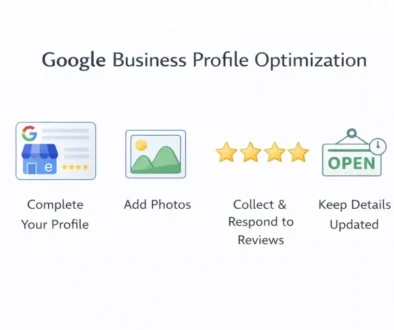
• Your Google Business Profile
• Your social media pages
• Your content
• Your reviews
If these are weak or inconsistent, people lose trust quickly.
A small business does not need a flashy online presence. It needs a clear and professional one. Your website should explain what you do, who you help, and how people can contact you.
Step 3: Focus on the right channels
Not every platform will give you results.
A digital marketing strategy for small businesses should focus on the channels that bring the best return.
For example:
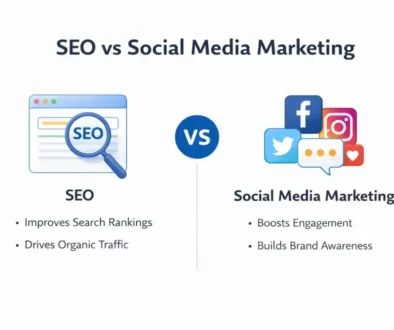
• Local businesses may benefit from SEO and Google Maps
• Service businesses may benefit from Google Ads and landing pages
• Brands may benefit from social media and content marketing
• E-commerce businesses may need paid ads, email marketing, and retargeting
Trying to do too much at once weakens your results. Focus on the channels that match your business model.
Step 4: Use content to build trust
People do not buy from businesses they do not trust.
That is why content matters.
Content helps your business show up, answer questions, and build credibility over time. This can include:
• Blog posts
• Social media content
• Videos
• Testimonials
• Case studies
• Email content
A digital marketing strategy for small businesses should always include content that supports the buyer journey.
Content is not just for posting. It is for positioning.
Step 5: Use paid ads with a plan
Paid ads can bring fast results, but only if they are used properly.
A lot of small businesses waste money because they run ads without a clear offer, a proper landing page, or tracking.
If you use ads, make sure you have:
• A clear goal
• A defined audience
• A strong offer
• A conversion-focused landing page
• Tracking in place
Paid ads should support your strategy, not replace it.
Step 6: Improve your website for conversion
Getting traffic is not enough.
If your website does not convert, you are losing money.
Your site should make it easy for people to:
• Understand your offer
• Trust your business
• Take action
That means clear headlines, strong call to action, testimonials, and simple navigation.
A digital marketing strategy for small businesses should always include conversion improvement. More traffic is useless if the website does not convert.
Step 7: Track what is working
You cannot improve what you do not measure.
Track the basics:
• Website visits
• Leads
• Conversion rate
• Cost per lead
• Top performing pages
• Best traffic sources
This helps you make smarter decisions instead of relying on assumptions.
Small businesses that track results grow faster because they know what is working and what is wasting money.
Final Thoughts
A digital marketing strategy for small businesses is not about doing more. It is about doing the right things in the right order.
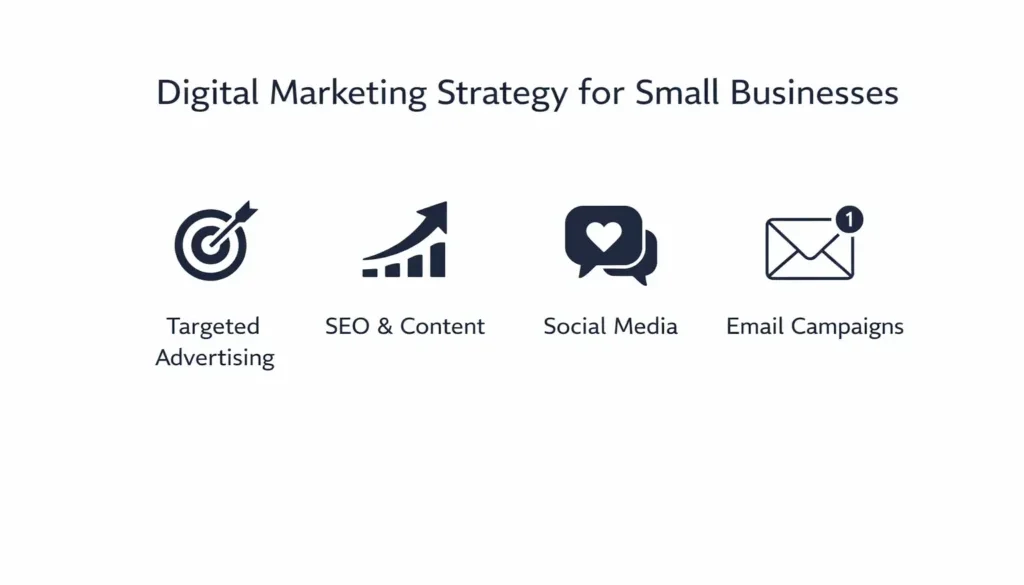
Start with audience clarity. Build a strong online presence. Choose the right channels. Use content to build trust. Run ads with purpose. Improve your website. Track everything.
That is how small businesses move from random effort to predictable growth.
If your business is still relying on inconsistent posting and trial-and-error marketing, it is time to build a real system.