Local SEO for Small Businesses: 7 Powerful Ways to Rank Higher
Local SEO for small businesses is no longer optional. If people cannot find your business on Google, they will find your competitor instead. Most small businesses lose customers not because their service is weak, but because their online presence is invisible.
Local search is where buying intent is high. When someone searches for a service nearby, they are usually ready to act. That is why local SEO matters so much. It helps your business appear in Google Search, Google Maps, and location-based results when people are actively looking for what you offer.
What local SEO for small businesses actually means
Local SEO for small businesses is the process of improving your visibility for searches tied to a specific location. This includes your Google Business Profile, your website, reviews, local citations, and location-based content. It is not just about ranking. It is about being present when customers are ready to choose.
A lot of business owners make the mistake of thinking a basic listing is enough. It is not. You need a system.
1. Optimise your Google Business Profile
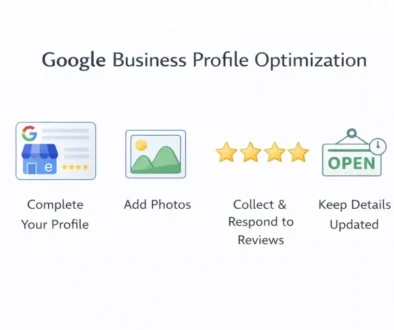
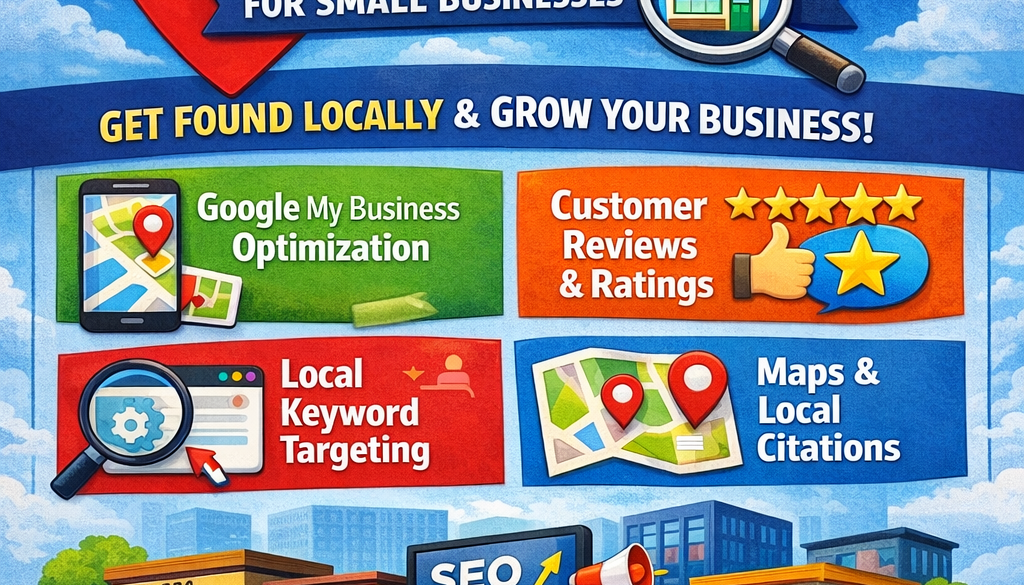
Your Google Business Profile is one of the strongest ranking signals for local visibility. Fill in every detail properly. Add your business name, category, address, phone number, hours, services, and a clear description.
Upload real photos of your business, team, products, or work. Update the profile regularly. Google prefers active businesses over dead listings.
2. Use location signals on your website
Your website should clearly tell Google where you operate. Add your city, service area, and local phrases naturally in your homepage, service pages, and contact page. Do not stuff keywords. Write for humans first.
If your website has no local signals, Google has less reason to rank it for local searches.
3. Get consistent reviews
Reviews help with both trust and ranking. Ask real customers to leave reviews. Keep it natural. A review that mentions your service and location is more useful than a vague one.
Reply to every review. That shows activity and credibility. Many small businesses ignore this and lose an easy advantage.
4. Build local citations
Citations are mentions of your business on directories, business listings, and local platforms. The important thing is consistency. Your name, address, and phone number should match everywhere.
If your details are different across listings, you weaken trust signals.
5. Create useful local content
A blog can support your local SEO if it answers real customer questions. Write about local problems, local services, and local search intent. This helps your website build authority.
For example, instead of writing random content, create pages and posts that solve specific problems your audience is searching for.
6. Add internal links and one strong external link
Your blog should link to your service page, homepage, and related articles. This helps Google understand your site structure.
Also, add one external link to a trusted source, such as Google’s official guidance on business profiles or local search. That improves credibility and fixes the “no outbound links” issue in RankMath.
7. Keep improving, not just publishing
Local SEO for small businesses is not one task. It is a process. Track rankings, update content, add fresh photos, get new reviews, and keep your profile active.
Businesses that treat local SEO like a long-term system usually outperform businesses that do a one-time setup and stop.
If you want stronger local visibility, more qualified leads, and better Google presence, local SEO for small businesses is one of the smartest investments you can make.
If you want to build a complete growth system instead of relying on random marketing efforts, working with a digital marketing strategist in Kannur can help you structure and execute a proper local SEO strategy.