On-Page SEO Techniques That Actually Work
On-page SEO techniques are one of the most important factors for ranking on search engines. If your website content is not optimised properly, even strong backlinks and good design will not help. Search engines need clear signals to understand what your page is about, who it is for, and why it should rank.
Many businesses make the mistake of treating on-page SEO as a one-time setup. That is wrong. On-page SEO is an ongoing process that affects visibility, click-through rate, user experience, and conversion.
If you want better rankings, you need to focus on on-page SEO techniques that actually work.
What on-page SEO really means
On-page SEO refers to the elements on your website page that you can control directly. These include your title tag, headings, content structure, keyword placement, image optimisation, internal links, and user experience.
The purpose is simple. Help search engines understand your content and help users get value quickly.
Strong on-page SEO techniques make your page more relevant, more readable, and more trustworthy.
1. Use one clear primary keyword
Every page should target one main keyword. That keyword should match search intent and appear naturally in the title, introduction, one subheading, and a few times in the body.
Do not stuff the keyword. That is outdated and dangerous. Instead, use it in a way that sounds natural and helpful.
For example, if your keyword is on-page SEO techniques, make sure the content stays focused on that topic instead of drifting into unrelated ideas.
2. Write a strong title tag
Your title tag is one of the first things users and search engines see.
A strong title should:
• Include the main keyword
• Create curiosity or value
• Stay under the ideal length
• Make people want to click
A weak title hurts both rankings and click-through rate. Good on-page SEO techniques always start with a strong title.
3. Improve heading structure
Headings help organise your content.
Use:
• H1 for the main title
• H2 for major sections
• H3 for supporting points
This makes the page easier to scan and helps search engines understand the hierarchy of your content.
A messy page with no structure usually performs worse than a clean, well-organised page.
4. Place keywords naturally
Keyword placement still matters, but only when it feels natural.
Your keyword should appear in:
• The first paragraph
• At least one heading
• A few times in the body
• Meta title and meta description
Do not overdo it. Good on-page SEO techniques rely on relevance, not repetition.
5. Write content that solves real problems
Search engines reward useful content.
Your page should answer the question behind the search. If users land on your page and find generic text, they will leave quickly. That sends weak engagement signals.
The best on-page SEO techniques focus on clarity, depth, and usefulness.
Ask yourself:
• Does this page actually help the reader?
• Does it solve a real problem?
• Does it explain the topic better than competitors?
If the answer is no, the page needs improvement.
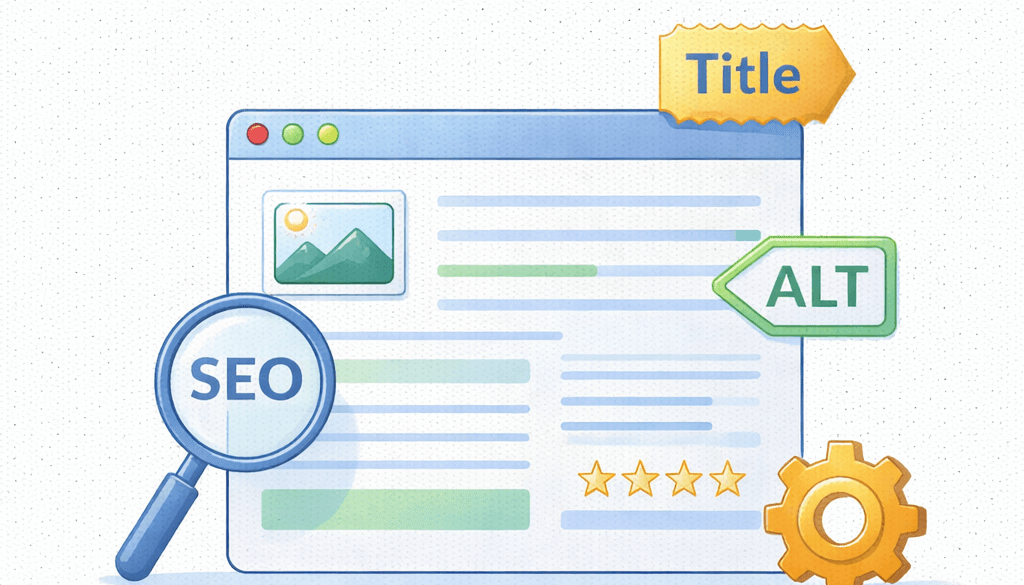
6. Optimise images properly
Images help both users and SEO.
Every image should have:
• A descriptive file name
• Relevant alt text
• Proper size for fast loading
Alt text helps search engines understand the content of the image. It also improves accessibility.
This is one of the easiest on-page SEO techniques to apply correctly.
7. Add internal links
Internal links connect your content and help distribute authority across your site.
They also guide users to other useful pages.
A strong on-page SEO strategy includes links to:
• Related blog posts
• Important service pages
• Supporting content
Internal linking improves crawlability and keeps visitors engaged longer.
8. Improve page speed and mobile experience
User experience is part of SEO.
If your page loads slowly or looks bad on mobile, people leave. That increases bounce rate and reduces trust.
Google cares about that.
Good on-page SEO techniques always include performance improvements like:
• Compressing images
• Reducing heavy scripts
• Using a clean layout
• Making sure the mobile view is smooth
9. Match search intent
This is where most people fail.
You can target the right keyword and still rank poorly if your content does not match what users want.
If someone searches for on-page SEO techniques, they want a practical guide. Not a long theory lesson. Not a sales pitch.
Your content must match the intent behind the query.
10. Keep the page updated
SEO is not static.
Old pages can lose value if they are not updated. Refresh your content regularly, improve examples, and keep your information current.
This tells search engines that your page is active and relevant.
Final Thoughts
On-page SEO is not about tricks. It is about making your page easier to understand, easier to trust, and easier to rank.
The most effective on-page SEO techniques are simple:
• Use the right keyword
• Structure the page well
• Write useful content
• Optimize images
• Improve user experience
• Add internal links
• Match search intent
If you do these consistently, your pages will have a much better chance of ranking.
Strong on-page SEO is the base of every serious ranking strategy. Without it, everything else becomes harder.
Looking to implement effective digital marketing strategies for your business? Connect with a digital marketing strategist in Kannur to drive measurable growth and local online visibility.